We met for breakfast at 8 and then attended the disembarkation talk in the lounge. We had a few minutes to relax before boarding the bus and leaving at 10. Our guide was Biljana (bee-Yana). Again, we got information on the complicated history of another Eastern European country.
We are now in the eastern part of Croatia. The country’s population is 3 million and 1 million are in the capital of Zagreb. They speak a Slavic language, so understand neighbouring country’s language, but Croatia uses the Latin alphabet. They were under Austro-Hungarian monarchy’s rule until WW1, then joined Yugoslavia until WW2. After that war, they became a satellite part of German and Italy.
Tito was a much-loved ruler of Yugoslavia during 60s and 70s. He died in 1980 and the unification started to dissolve. Croatia was the second country to want its own government, but that led to the 1991 war.
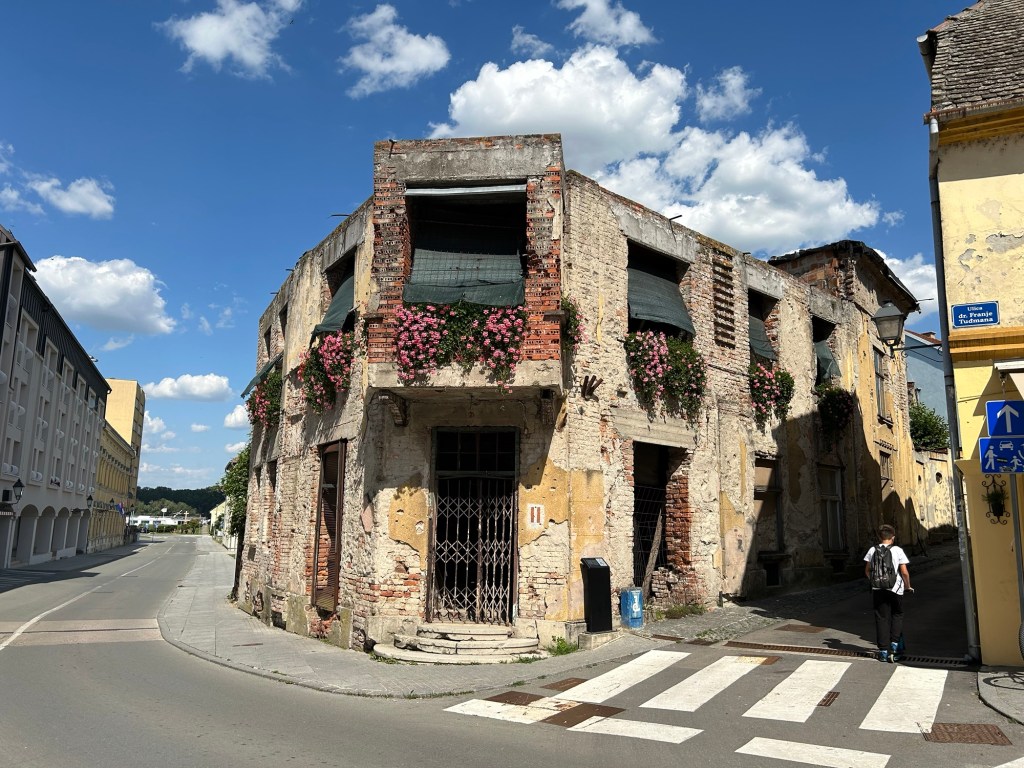
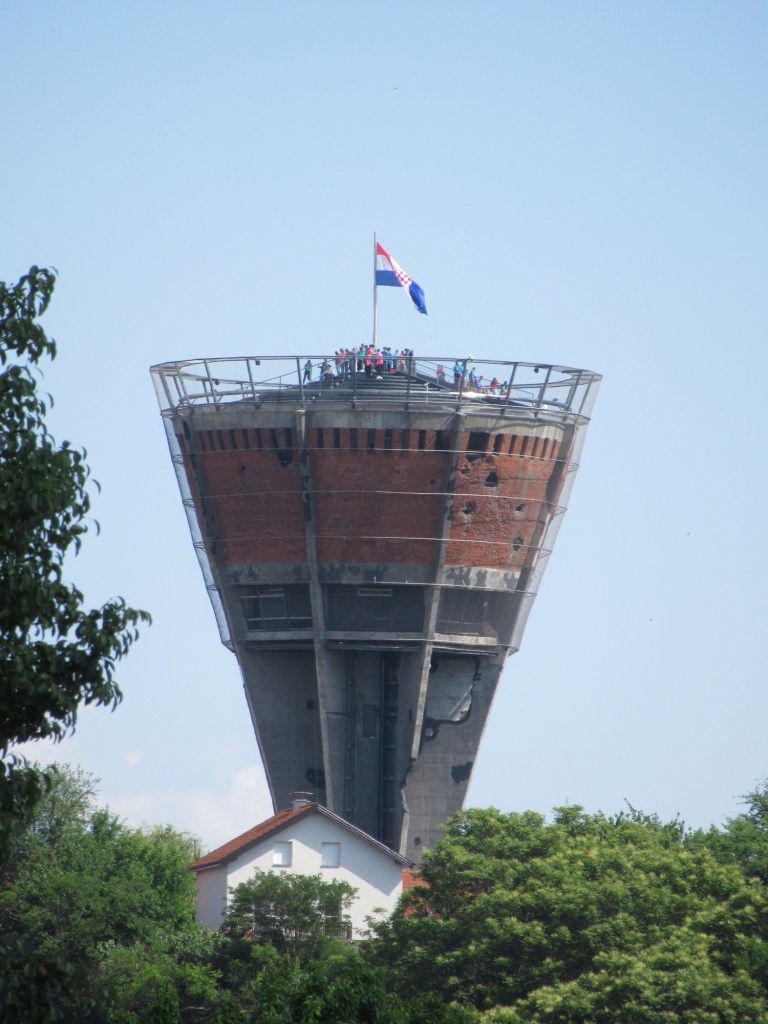
Vukovar is a phoenix, rising from the ashes of the war. The town sits on the border with Serbia. The Danube river port is important for tourism and trade. The 1991 war destroyed 90% of Vukovar. Biljana emphasized that – 9 0! The Yugoslav army was in this town, and Serbia was trying to take it as part of Serbia. There are still a few buildings showing the devastation from the fighting and many buildings with bullet holes that have not been repaired. In fact, there is no property tax, so a building will be basically abandoned but it can sit like that forever!
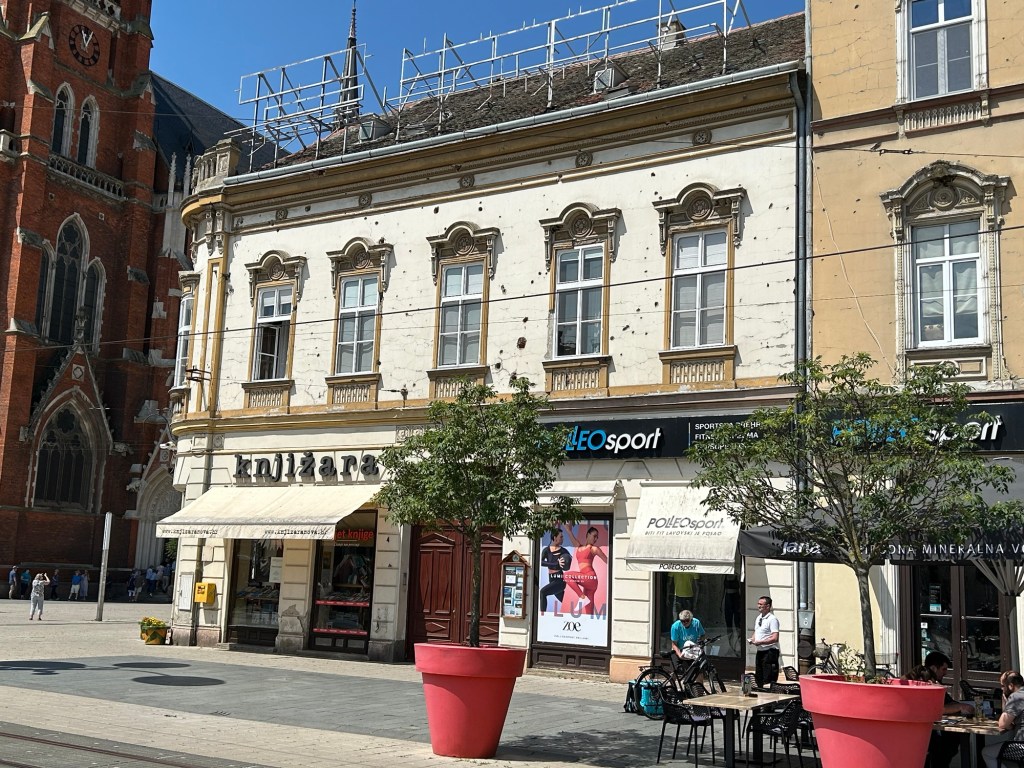
In 2006 river cruises believed it was safe and started to come.
Croatians are mainly catholic. It costs about €120m to buy an apartment in Vokavar. Monthly salaries are about €1000 salary net after 40% income tax. Croatia has one of the highest VAT in Europe at 25%.
Kids start school at 6 1/2 and are required to attend for eight years. After that they decide between vocational or grammar schools. Croatia has a high literacy rate of 98%.
In 2013 Croatia entered EU and most recently entered Schengen, which means they don’t need to pass through passport control for the neighbouring countries,
We learned to say Hvala for thank you and Dobro Dane for hello.
The land in this area is very flat and they grow corn, sunflowers, wheat, soybeans, barley. The land is mainly owned by foreign companies, but local workers are hired. Winter is shorter and warmer than it used to be. It is hot and humid in summer with mosquitos!
It was about a 20 minute ride to Osijek.
Osijek was not occupied during the war, so not destroyed. There were many refugees from occupied areas here. The Drava River is a tributary of the Danube and runs through Osijek.
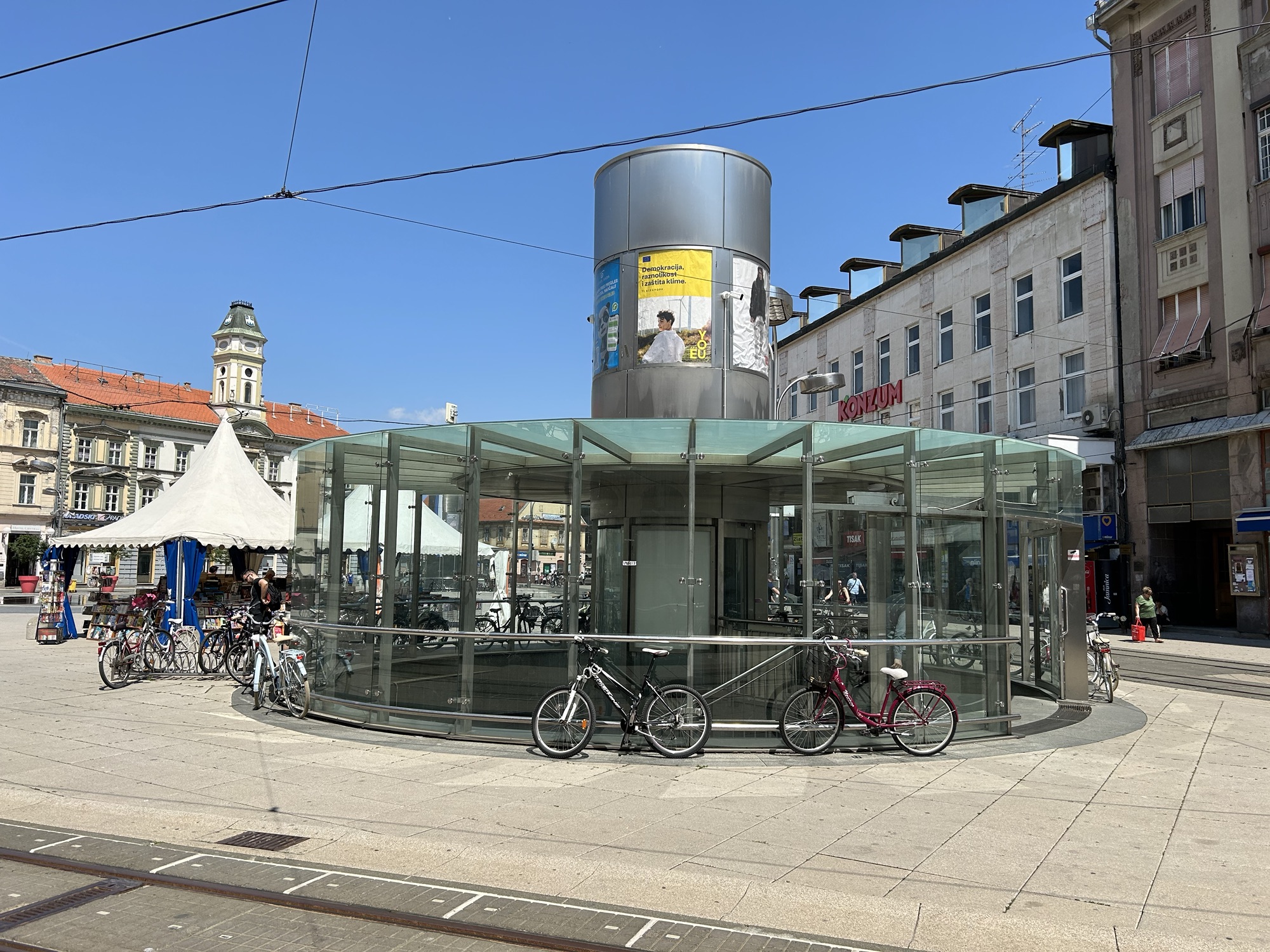
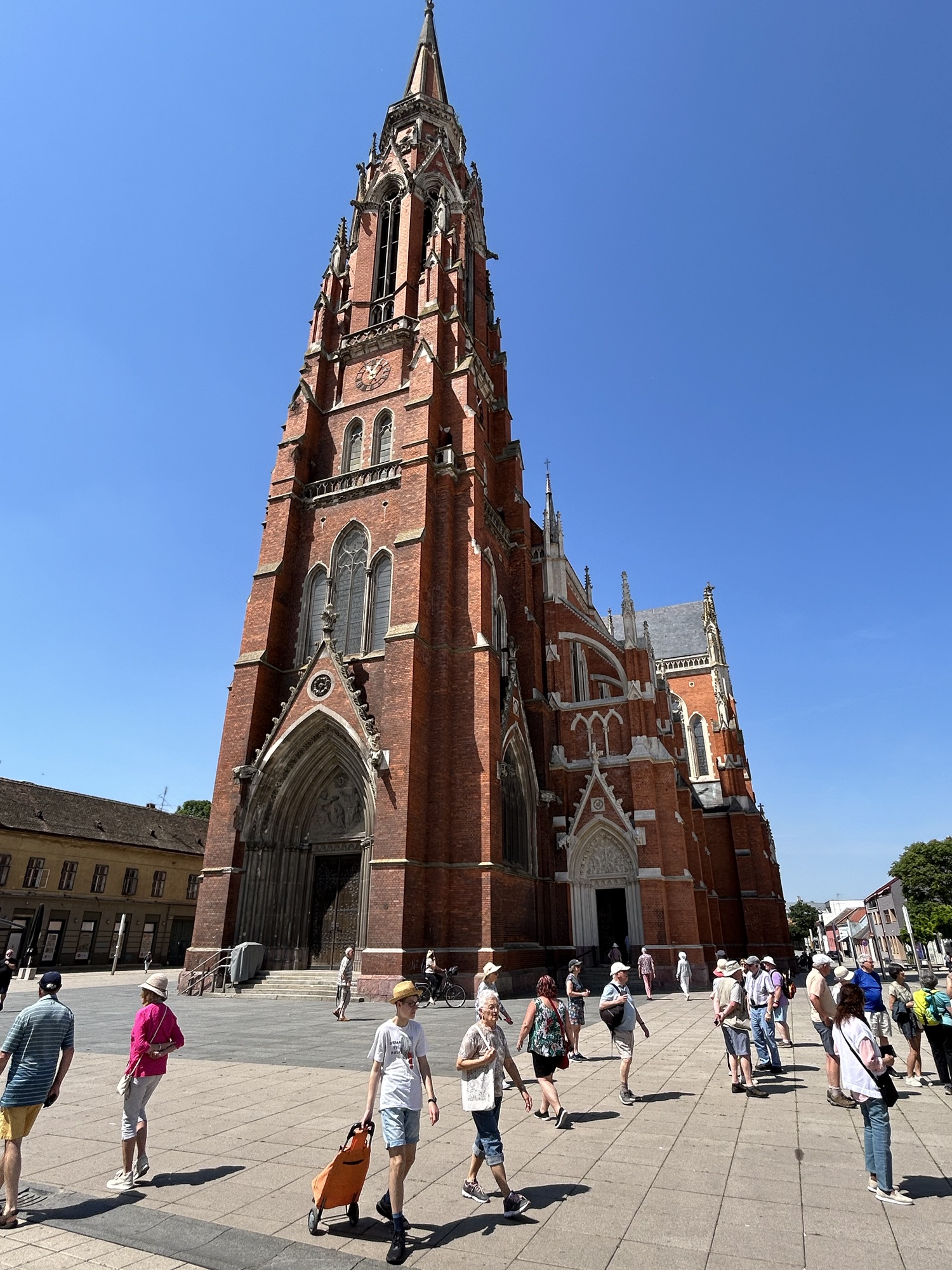
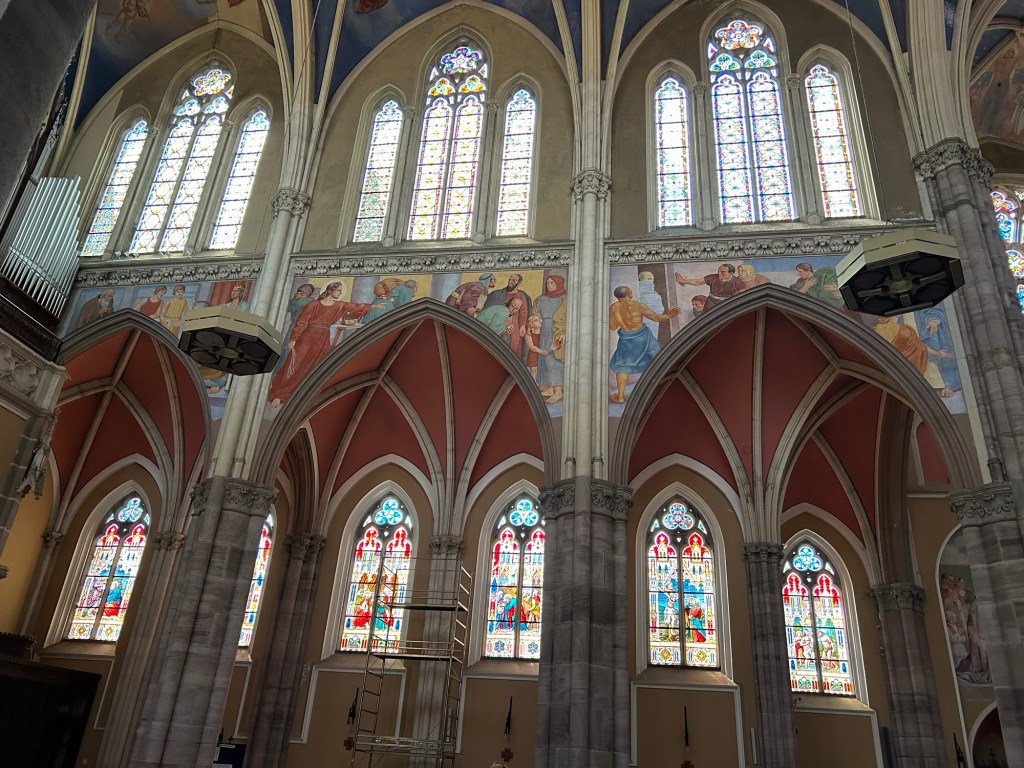
Biljana took us to their main square which has an underground area like our Winnipeg Square. We went into the catholic cathedral and had a little walk around the pretty town.
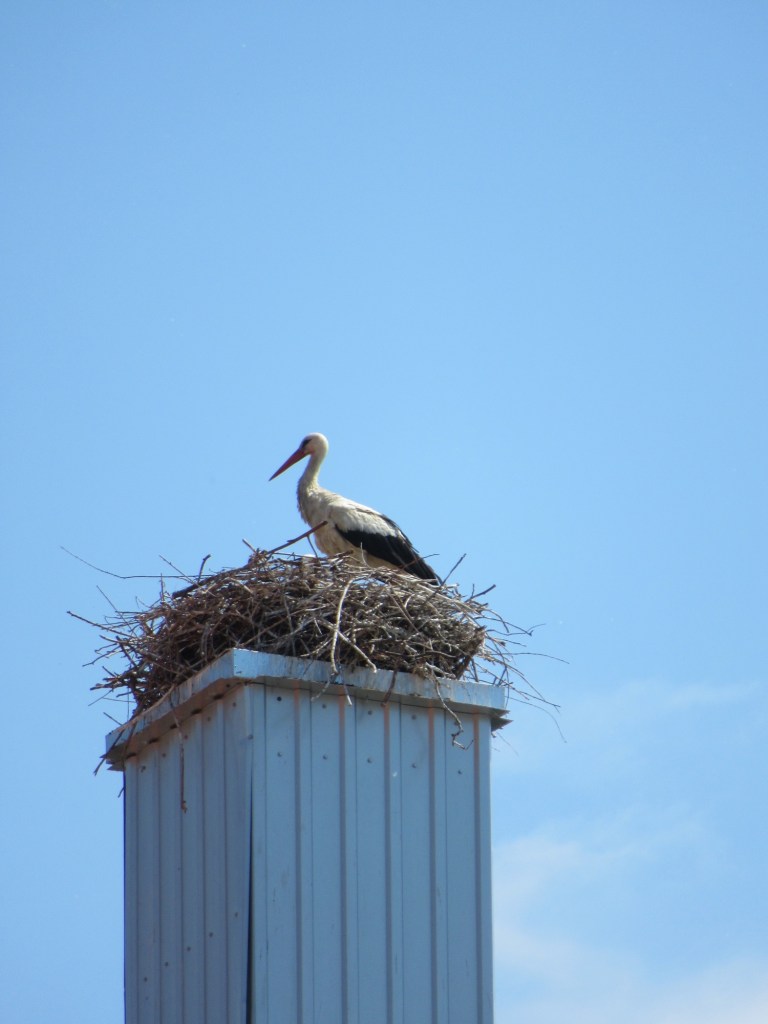
We were back on the bus at 11:45, for a trip to the Middle part of the town. This was a fortress constructed in the 17th century by Austo-Hungarian forces. Biljana walked us around explaining what the buildings are now and what some of them used to be.
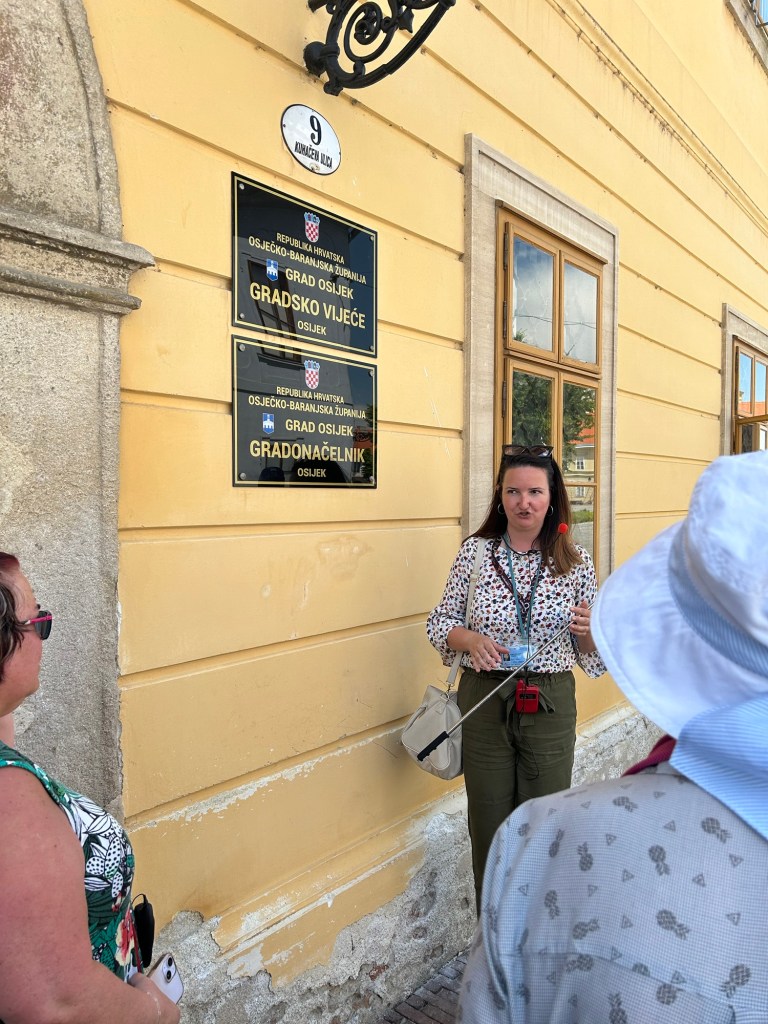
Biljana: To cross the street at a pedestrian crossing you just have to show determination.
Our host for lunch was Nada (which means hope in Croatian). We sat on a pretty, shaded, outdoor patio and had a very tasty typical Croatian meal.
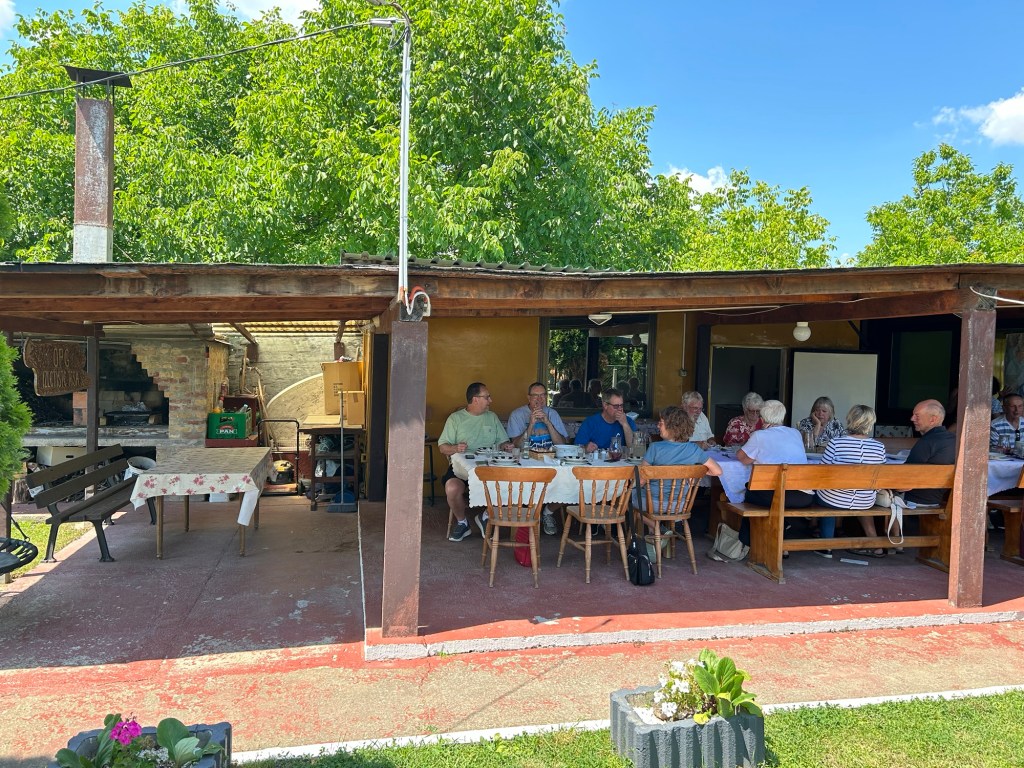
Nada had a story about the war. Her parents were a “mixed marriage” meaning her father was Serbian and her mother was Croatian. They were living in Vokavar and when she was 13, the soldiers were coming into their house and threatening to kill her invalid father, so they moved to Serbia. Unfortunately, her story was interrupted so I didn’t get to hear how she came to be back in Croatia.
1999 NATO bombed Serbia which ended the war.
When we got back to Vukovar, Dean and I took a short walk to take a picture of the building that became a kind of poster child for the war.
Luanne, Gary and I went to the pool for a swim and had a good visit with David and Chris. Eventually we ended up in the lounge for the Captain’s reception and then the dining room for another wonderful dinner. They called this the farewell dinner because tomorrow is going to be busy with packing, settling our accounts and sailing through Budapest.
 Enchantment of Eastern Europe
Leave a comment